General Ardalion Alexandrovitch Ivolgin
General Ardalion Alexandrovitch Ivolgin is a retired Russian general, the patriarch of the Ivolgin family, whose life is a tragicomic descent into alcoholism, pathological lying, and financial ruin, culminating in a stroke brought on by the shame of a theft he committed. His character serves as a poignant emblem of the decayed nobility, oscillating between grandiose delusions of his past glory and the squalid reality of his present dependence, ultimately revealing a broken man whose final collapse mirrors the moral and social disintegration at the heart of the novel.
Identity and Background
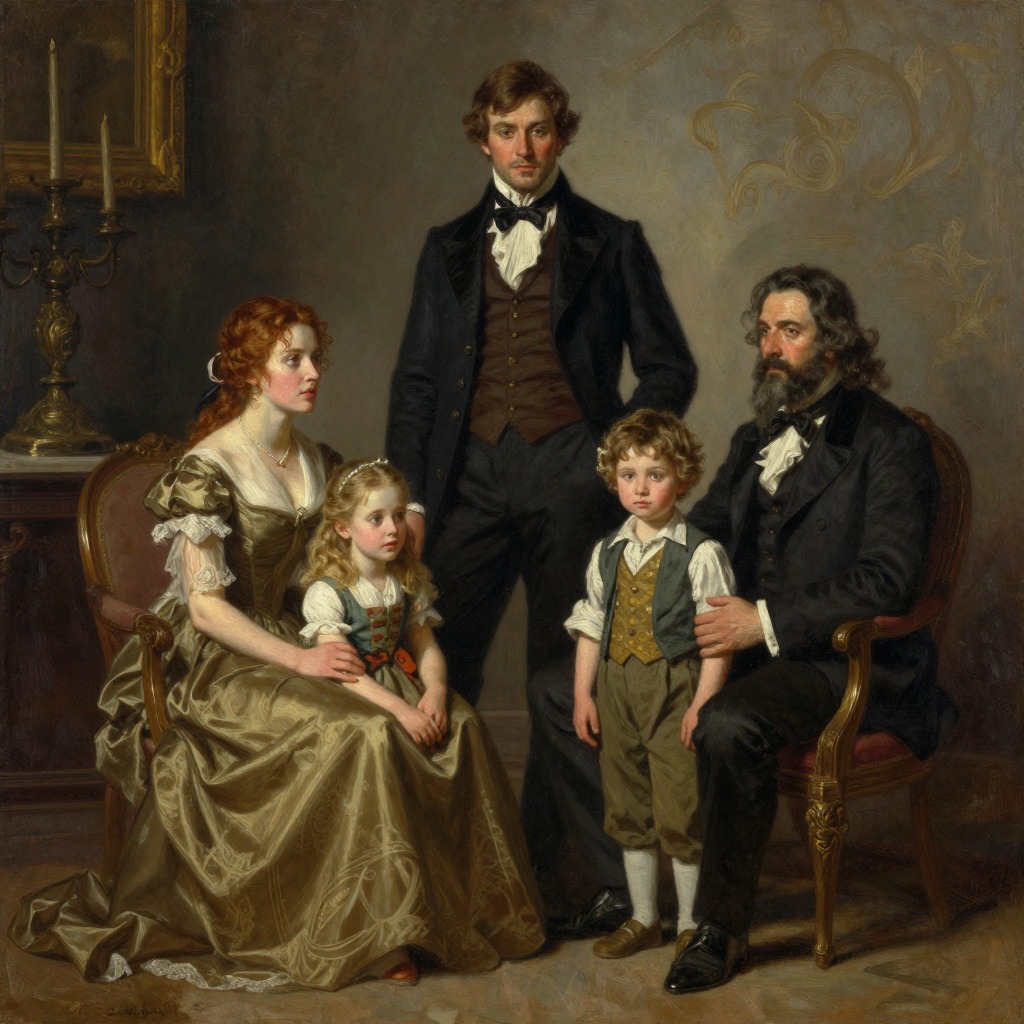
General Ivolgin is the father of Gavrila Ardalionovitch Ivolgin, Varvara Ardalionovna Ptitsin, and Colia Ivolgin, and the husband of Nina Alexandrovna. He is a tall, red-faced man of about fifty-five, with greyish hair and whiskers, and large eyes that stand out of their sockets. His appearance would have been distinguished had it not been for the dirtiness of his person and the smell of vodka that clings to him. He walks with an affected dignity, clearly trying to impress people with his manner. He was once a man of some standing, having been received in the best society, but has been turned out of it two or three years prior to the novel's events due to certain weaknesses. He now lives as a nominal master of the house, sleeping on a wide sofa in a small room near the kitchen, and is obliged to pass through the kitchen and up or down the back stairs. His son Colia, a schoolboy of thirteen, shares this room with him, his chief duty being to look after his father, who needs to be watched more and more every day.
Life and Plot Trajectory
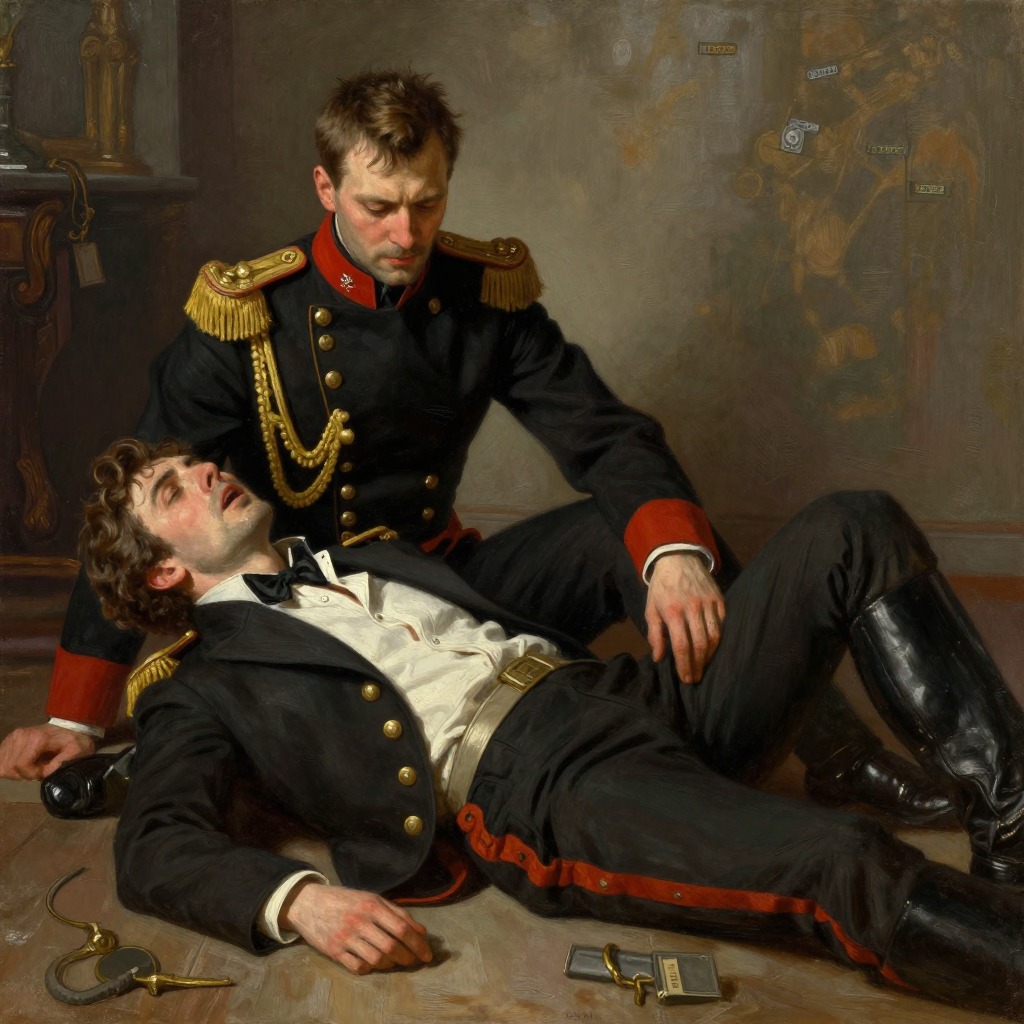
The general's trajectory is one of steady degradation punctuated by moments of maudlin sentiment and furious pride. He is a habitual drunkard and a compulsive liar, fabricating elaborate stories about his past, such as claiming to have been a page to Napoleon during the 1812 invasion of Moscow. He tells the prince that he was appointed a page after Napoleon saw him in the crowd, and that he witnessed the emperor's nightly sorrows and even exchanged embraces with him. These tales are met with skepticism and ridicule, even by his own family. He is also financially destitute, constantly borrowing money and eventually landing in a debtor's prison after signing promissory notes to the captain's widow, Marfa Borisovna, which he never expected to be formally used against him. His relationship with his son Gania is particularly fraught; Gania treats him with contempt and threatens to turn him out of the house. The general's final, catastrophic act is the theft of four hundred roubles from his friend Lebedeff, an act he attempts to conceal by hiding the purse in the lining of Lebedeff's coat. The shame and horror of this deed, combined with his alcoholism, lead to a stroke. He dies during a second stroke eight days after the first.
Key Actions and Objectives
The general's primary objective is to maintain a facade of dignity and respectability, which he does through grandiose storytelling and claims of past honors. He seeks to be treated with the deference he believes his rank and former life deserve. His key actions, however, are almost universally self-destructive. He quarrels with Lebedeff over the latter's lies about 1812, leading to a break in their friendship. He visits the Epanchin house, where he frightens Lizabetha Prokofievna and angers her with bitter hints about his son Gania, resulting in his being turned out in disgrace. He publicly curses Ptitsin's house, declaring, "My curse be upon this house!" before storming into the street. His most significant action is the theft of the four hundred roubles, which he takes from Lebedeff's coat pocket while drunk. He then attempts to return the money by hiding the purse in the lining of Lebedeff's coat, a clumsy and pathetic gesture of repentance that only deepens his humiliation.
Relationships and Conflict
The general's relationships are defined by conflict and a desperate need for validation. His wife, Nina Alexandrovna, is a long-suffering woman who loves him despite his degradation, and he adores her in his own way, often weeping over her forgiveness. His son Gania is his primary antagonist; Gania is ashamed of him and openly hostile, threatening to expose his theft. The general, in turn, accuses Gania of being a "blackguard" and a "calf." His relationship with his younger son, Colia, is more tender, as Colia tries to protect and care for him, even kissing his hands in the street. With Lebedeff, the general has a volatile friendship based on shared drinking and mutual need, but it is destroyed by the theft and the general's subsequent accusations. The general's pathological lying creates constant conflict, as his stories are easily debunked, leading to public humiliation and private rage.
Change and Ending
The general undergoes a dramatic and tragic change in the final days of his life. The theft of the four hundred roubles, and the subsequent cover-up, triggers a crisis. He becomes increasingly irritable, paranoid, and prone to fits of rage. He stops drinking, which only worsens his condition. The climax comes when he is confronted by his family and Hippolyte, who taunts him about the non-existence of his invented friend, Captain Eropegoff. In a paroxysm of fury, he curses the house and rushes into the street. There, he collapses into Colia's arms, having suffered a stroke. He dies eight days later from a second stroke. His death is a direct consequence of his moral and physical collapse, and it brings a somber end to his family's struggles. The prince attends his funeral, and the service produces a great effect on him.
Narrative Role and Evaluation
General Ivolgin serves as a tragicomic figure who embodies the decay of the old Russian aristocracy. His lies are not merely self-aggrandizement but a desperate attempt to construct a meaningful identity in the face of his own worthlessness. He is a man who has "fallen to such a depth of humiliation" that he can only exist through fantasy. His story of being Napoleon's page, while absurd, reveals a deep-seated need for significance and a connection to a grander historical narrative. His theft and subsequent breakdown illustrate the corrosive power of shame and the impossibility of escaping one's own degradation. He is a figure of pathos, a "great man fallen" in Lebedeff's words, whose final collapse is both a personal tragedy and a symbolic representation of the moral bankruptcy that pervades the world of the novel. His death, mourned by his wife and son, provides a moment of genuine, unadorned grief amidst the novel's chaos.